.PNG&w=640&q=75)
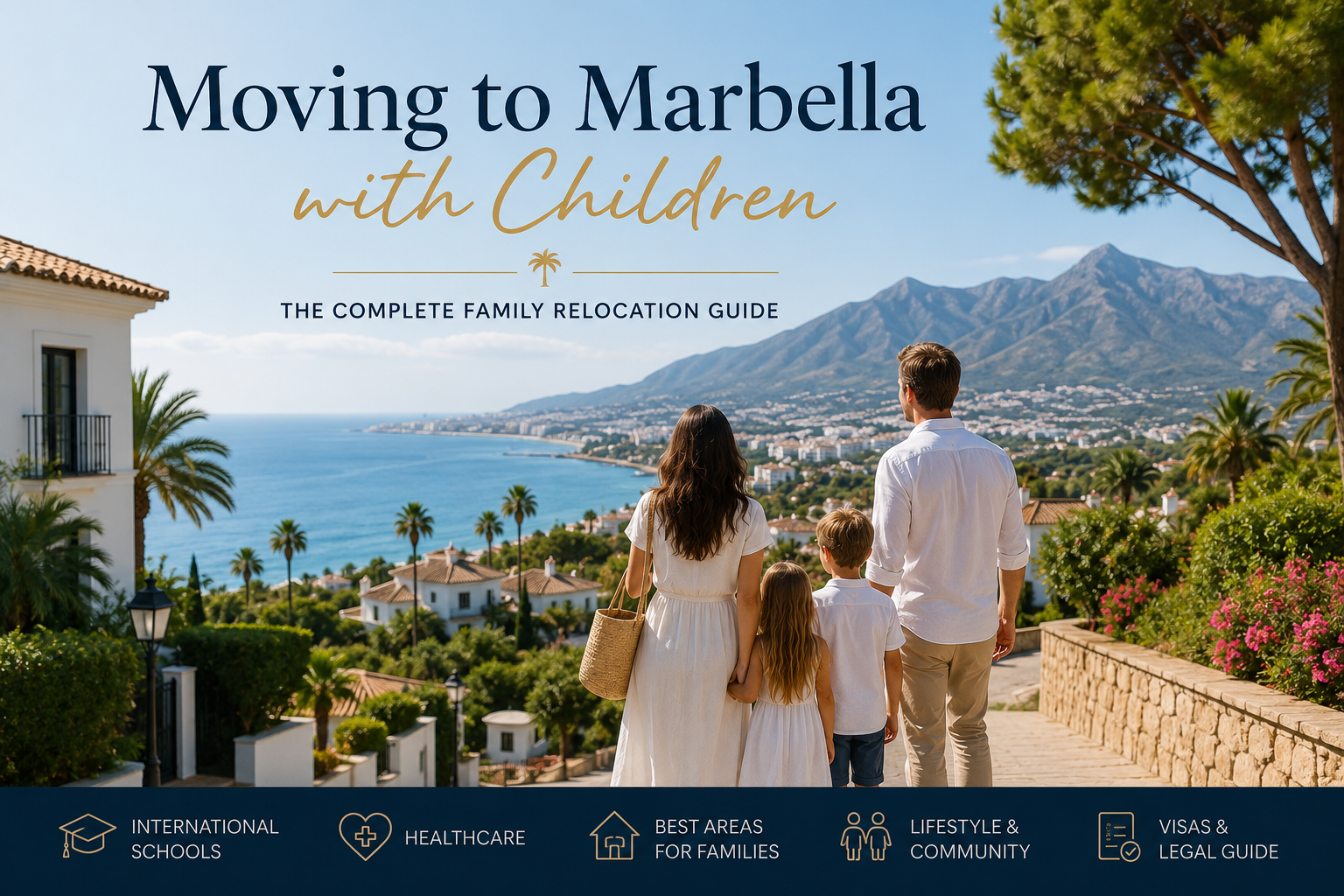
Moving to Marbella with Children | The Complete Family Relocation Guide | EQUA ESTATES
Planning to move to Marbella with children? Discover the complete family relocation guide covering schools, healthcare, visas, housing, costs of living, the best family-friendly areas, and everything you need to know before relocating to the Costa del Sol.
Why More Families Are Choosing Marbella
Relocating to another country is one of the biggest decisions a family can make. Beyond choosing a beautiful home, parents are making a choice about their children's education, friendships, wellbeing and future. Naturally, this comes with excitement—but also many questions.
Will our children adapt?
Will they make friends?
Will they learn Spanish?
Is the education system good?
Will we feel at home?
These are some of the very first questions families ask us when they start considering a move to Marbella.
The reassuring news is that thousands of international families have successfully made this transition, and every year more choose Marbella and the Costa del Sol as a place to build not just a second home, but a new life.
Marbella offers something that is becoming increasingly difficult to find elsewhere in Europe: an exceptional quality of life combined with a truly international environment. Children grow up surrounded by classmates from all over the world while enjoying more time outdoors, a healthier lifestyle and a strong sense of community.
Unlike destinations that depend heavily on seasonal tourism, Marbella is a vibrant, year-round city where families live, work and study throughout the year. International schools, public schools, healthcare facilities, sports clubs, music academies and countless outdoor activities make it possible for children to enjoy a balanced and active childhood.
One of the aspects many parents appreciate most is the Mediterranean lifestyle itself. Children spend far more time outdoors than in many northern European countries. Weekends often mean cycling along the promenade, spending afternoons at the beach, hiking in the nearby mountains or simply meeting friends in one of the many parks and playgrounds. It is a lifestyle that naturally encourages physical activity and family time.
Safety is another important reason why many families decide to relocate here. While, like any city, Marbella requires common sense and awareness, many international residents describe it as a place where children enjoy a greater degree of independence than they did in larger metropolitan areas. Families often know their neighbours, children quickly build friendships through school and extracurricular activities, and the international community is generally welcoming to newcomers.
Perhaps one of Marbella's greatest strengths is its diversity. More than 150 nationalities are represented across the Costa del Sol, creating a multicultural environment where newcomers rarely feel like outsiders. It is common for children to have classmates speaking several different languages, and for parents to quickly find communities through schools, sports clubs or local events.
For many families, one of the biggest surprises is how quickly children adapt. While parents often worry about language, education and making new friends, younger children frequently integrate much faster than expected. Surrounded by classmates every day and immersed in a bilingual or multilingual environment, they often develop confidence in Spanish within months while maintaining their native language at home.
At EQUA ESTATES, we've seen this happen countless times. Parents arrive with understandable concerns about leaving familiar routines behind, yet a year later they often tell us the move was one of the best decisions they ever made—not only for themselves, but especially for their children.
Relocating to Marbella is not simply about changing your address. It is about embracing a lifestyle that places greater value on family, wellbeing and balance. While every family's journey is different, one thing remains remarkably consistent: children tend to adapt far more quickly than their parents imagine, and the opportunities available to them here often exceed expectations.
💡 EQUA Local Insight
One concern we hear almost every week is: "I'm afraid my child won't adapt."
In reality, we've found that children are often the first members of the family to truly feel at home. School, sports, birthday parties and everyday interactions help them build friendships surprisingly quickly. Parents, on the other hand, usually need a little more time to establish their own social circle. The first few months can feel like a big change, but once children are settled and happy, the whole family's confidence tends to grow with them.
"Will my child actually adapt and receive a good education?"
Education in Marbella: What International Families Need to Know
For most parents, choosing the right school is the single most important factor when relocating to another country. While finding the right home is essential, knowing that your children will receive a quality education and feel supported in their new environment often provides the confidence needed to make the move.
The good news is that Marbella offers an excellent range of educational options, making it possible for families to choose a school that best matches their children's needs, language abilities and future academic plans.
Whether you prefer the Spanish public education system, a bilingual school, a semi-private colegio concertado or one of the many internationally recognised private schools, families relocating to Marbella have considerably more choice than in many other parts of Europe.
One of the greatest advantages of raising children in Marbella is that education is not limited to the classroom. Living in such an international community naturally exposes children to different languages, cultures and perspectives from an early age. It is not unusual for a child to have classmates from ten or more different nationalities, creating an open-minded environment that prepares them for an increasingly global world.
Public Schools in Marbella
Many international families are pleasantly surprised to discover the quality of Spain's public education system.
Public schools (colegios públicos) are free to attend and follow the Spanish national curriculum. They are generally modern, well-equipped and closely integrated into their local communities.
One concern parents often have is:
"My child doesn't speak Spanish. Will they be able to cope?"
In many cases, the answer is yes.
Schools in Andalusia have extensive experience welcoming international students. While support varies between schools, many public schools provide additional language assistance for newly arrived children through regional educational support programmes designed to help non-Spanish-speaking pupils integrate into mainstream classes. Younger children, in particular, often make remarkable progress during their first year.
Many teachers also have a working knowledge of English, especially in schools that regularly welcome international families. Although lessons are taught in Spanish, teachers generally make every effort to help new students feel included while encouraging gradual language immersion.
One of the greatest strengths of the public system is exactly this immersion. Rather than learning Spanish only in language classes, children use it every day with classmates, teachers and friends. For younger pupils especially, this natural exposure often leads to impressive language development within a relatively short period of time.
Parents are frequently amazed by how quickly their children begin speaking Spanish—often long before they feel confident using it themselves.
EQUA Local Insight
One of the biggest fears parents share with us is that their child will "lose a year" because they don't speak Spanish.
In reality, we've seen the opposite happen many times.
Children are incredibly adaptable. Within just a few months, many begin understanding classroom conversations, making friends and communicating confidently. By the end of their first school year, it's not uncommon for parents to tell us that their child is now translating conversations for the whole family.
Of course, every child is different, but younger children in particular often surprise everyone with how quickly they embrace their new environment.
Semi-Private Schools (Colegios Concertados)
Between public and fully private education lies another option that many international families are not familiar with before moving to Spain.
These are known as colegios concertados.
Concertado schools receive partial funding from the Spanish government while also charging relatively modest additional fees compared to private international schools.
For many families, they represent an excellent balance between affordability, academic quality and language immersion.
Teaching is primarily in Spanish, although many concertado schools place a strong emphasis on English and additional foreign languages.
These schools are often chosen by bilingual families or by parents who want their children to integrate more fully into Spanish culture while still benefiting from smaller class sizes and additional educational resources.
International Schools
For families who plan to continue an international curriculum or expect to relocate again in the future, Marbella offers one of the strongest selections of international schools in southern Europe.
Parents can choose from British, Swedish, German, French and other international educational systems, allowing children to continue their education with minimal disruption.
Many of these schools offer internationally recognised qualifications such as the British Curriculum, IGCSEs, A Levels, or the International Baccalaureate (IB), making future transitions to universities around the world much easier.
International schools also provide multilingual environments where children quickly build friendships with classmates from diverse cultural backgrounds.
Although tuition fees vary considerably, many families view this as an investment in both education and future opportunities.
In a dedicated guide, we'll compare Marbella's leading international schools in detail, including curricula, annual fees, waiting lists, age groups and nearby residential areas best suited for each school.
Which Type of School Is Right for Your Family?
There is no universal answer.
The best choice depends on several factors:
- Your child's age.
- Their current language abilities.
- Whether you plan to stay in Spain permanently.
- Your preferred curriculum.
- University plans.
- Family budget.
- The level of integration you would like your child to experience.
Some families choose public schools to encourage rapid Spanish immersion and local integration. Others prefer international schools because they provide continuity with their home country's education system. Many families also make different choices for different children, depending on age and individual personality.
The most important decision is not necessarily choosing the "best" school, but choosing the school that best fits your family's long-term plans.
Looking Ahead
In the next chapter, we'll explore another topic that parents consistently rank among their top priorities: healthcare.
We'll explain how Spain's healthcare system works, the differences between public and private care, what to expect when registering your family, and why many international families feel reassured by the quality of medical services available on the Costa del Sol.
Healthcare in Marbella: Peace of Mind for Your Family
For many parents, healthcare is one of the biggest concerns when considering a move abroad.
Questions such as "What happens if my child gets sick?", "Can we see an English-speaking doctor?" or "Is the healthcare system reliable?" are completely natural.
The reassuring news is that Spain is consistently recognised as having one of the strongest healthcare systems in Europe and ranks highly in international comparisons for quality, accessibility and life expectancy. Both the public and private healthcare systems are well developed, giving families the flexibility to choose the level of care that best suits their needs.
For many expatriate families, this combination of excellent medical standards and relatively affordable private healthcare becomes one of the biggest advantages of living in Marbella.
Public Healthcare in Spain
Spain's public healthcare system (Sistema Nacional de Salud) provides comprehensive medical care through a network of hospitals, health centres and specialist clinics across the country.
Families who are entitled to access the public system—whether through residency, employment or other legal arrangements—benefit from a wide range of services, including:
- Family doctors (GPs)
- Paediatric care
- Emergency treatment
- Specialist consultations
- Hospital care
- Vaccination programmes
- Maternity services
- Preventive healthcare
Children living in Spain are covered by routine vaccination schedules and regular paediatric check-ups, helping families maintain continuity of care after relocating.
Appointments with your family doctor are usually arranged through your local health centre (Centro de Salud), while specialist consultations are provided following referral where appropriate.
Although waiting times can vary for certain non-urgent specialist appointments, emergency medical care is widely recognised for its high standard and efficiency.
Private Healthcare: Why Many International Families Choose It
While many residents are fully satisfied with the public healthcare system, a large number of international families also choose private health insurance.
The reasons are simple.
Private healthcare often offers:
- Shorter waiting times
- Greater flexibility when choosing specialists
- English-speaking doctors
- Direct access to many specialists without referral
- Modern facilities
- Convenient appointment scheduling
Fortunately, private medical insurance in Spain is generally much more affordable than many families expect, particularly when compared with countries such as the United States or Switzerland.
Many employers also include private health insurance as part of their employment packages, while self-employed residents frequently choose comprehensive family policies.
Hospitals and Medical Facilities in Marbella
One of Marbella's greatest strengths is the quality of medical care available within a relatively small geographical area.
Families have access to several highly regarded hospitals and clinics, including both public and private facilities.
Among the best-known are:
- Hospital Costa del Sol, one of the region's principal public hospitals, providing emergency services, paediatrics, surgery and specialist care.
- Hospiten Estepona and Hospiten Marbella, offering private medical services across a wide range of specialties.
- HC Marbella International Hospital, particularly well known for its international patient services and multilingual medical staff.
In addition to hospitals, Marbella offers numerous private paediatric clinics, dental practices, physiotherapists, diagnostic centres and specialist consultants, many of whom regularly work with international families.
English-Speaking Doctors
One concern many parents have before moving is whether they will be able to communicate effectively with healthcare professionals.
Fortunately, this is rarely a problem in Marbella.
Because of the area's international population, many doctors, paediatricians, dentists and medical specialists speak excellent English, while some also speak French, German, Dutch, Swedish and other European languages.
Private hospitals are particularly accustomed to treating international patients and often have multilingual reception teams who can assist throughout appointments.
For families who are still learning Spanish, this provides considerable reassurance during the first months after relocation.
Children's Healthcare
Parents are often surprised by how child-focused healthcare is in Spain.
Regular paediatric monitoring forms an important part of the healthcare system, and children generally have access to routine health checks, vaccinations and developmental assessments throughout their early years.
Should your child require emergency medical attention, hospitals throughout Marbella and the Costa del Sol are equipped to provide urgent paediatric care.
For everyday concerns such as ear infections, fevers, allergies or minor injuries, appointments with your family doctor or paediatrician are usually straightforward to arrange.
Many families also appreciate the fact that pharmacies (farmacias) are widely available, often with extended opening hours and pharmacists who are able to provide advice for minor health concerns.
Mental Wellbeing Matters Too
Relocating to another country is not only a practical change—it is also an emotional one.
Children may experience excitement, curiosity or occasional anxiety during the first months after moving.
This is perfectly normal.
Fortunately, Marbella's international community offers many opportunities for children to build confidence and friendships through school, sports clubs, language academies and extracurricular activities.
Parents often notice that once children establish a routine and begin forming friendships, they quickly start to feel that Marbella is home.
EQUA Local Insight
One of the questions we hear surprisingly often is:
"What happens if my child gets sick during our first weeks in Spain?"
The reality is that families are usually pleasantly surprised by how accessible healthcare is here.
Whether you choose public healthcare, private insurance or both, finding a qualified paediatrician is generally straightforward. Many of the doctors we recommend have extensive experience working with international families, making those first appointments much less stressful than parents often expect.
Health Insurance: Do You Need It?
Whether private health insurance is necessary depends on your personal circumstances.
Families relocating permanently may become entitled to public healthcare through residency or employment, while others initially rely on private insurance, particularly during the relocation process.
Many families eventually choose to combine both systems, using public healthcare for routine medical needs while maintaining private insurance for faster specialist access and additional flexibility.
This hybrid approach is common among both Spanish residents and expatriates and offers the reassurance of comprehensive medical coverage while keeping healthcare costs relatively manageable.
Why This Matters for Families
When parents think about relocating, healthcare is rarely just about hospitals or insurance policies.
It's about knowing that if something unexpected happens—whether it's a late-night fever, a broken arm after football practice or simply finding a trusted paediatrician—you'll have access to high-quality medical care close to home.
For many families who relocate to Marbella, this peace of mind quickly becomes one of the reasons they realise they made the right decision.
⭐ Next Chapter
The next section will be:
Buying or Renting? What's the Best Choice for Families Moving to Marbella?
I think this will become one of the highest-converting chapters because it naturally introduces EQUA's expertise while genuinely helping families decide whether they should rent first, buy immediately or follow a staged relocation strategy. This is where we can add a lot of practical advice based on your real experience with relocating clients.
Buying or Renting? Which Option Is Best for Families Moving to Marbella?
One of the biggest decisions families face before relocating to Marbella is whether to purchase a property immediately or rent first.
It's a question we discuss almost every week with clients, and the truth is that there isn't a single answer that suits everyone.
The right decision depends on your family's circumstances, your familiarity with the area, your long-term plans and, perhaps most importantly, how certain you are about where you want to live.
While buying immediately may be the perfect solution for some families, many others benefit from spending several months renting before making one of the biggest financial decisions of their lives.
At EQUA ESTATES, we believe that choosing the right neighbourhood is often more important than choosing the right property.
A beautiful home can always be renovated.
Its location cannot.
Why Many Families Choose to Rent First
Families relocating from abroad often arrive with only a limited understanding of Marbella's different neighbourhoods.
They may have visited on holiday, stayed in a hotel or spent time near Puerto Banús, but living somewhere permanently is very different from spending two weeks on vacation.
By renting first, families have the opportunity to experience everyday life before committing to a purchase.
They discover things that no property portal can show.
For example:
- How long does the school run actually take during the morning?
- Which supermarket do you naturally end up using?
- Is the neighbourhood lively all year or only during summer?
- How much traffic is there at school collection times?
- Where do local families spend weekends?
- Which sports clubs become part of your children's routine?
These small details often become much more important than the size of the terrace or the colour of the kitchen.
The Advantages of Renting First
Renting before buying offers several important benefits.
It allows your children to settle into school before introducing another major change.
It gives parents time to become familiar with different areas and establish a daily routine.
It also reduces the pressure of making a quick purchasing decision while adapting to a new country.
Many families discover that their priorities change after a few months.
Initially, they may dream of living directly on the beach.
Later, they realise they spend most afternoons taking children to football training, music lessons or birthday parties, and being closer to school becomes far more valuable.
Others discover that they prefer a quieter residential community with larger gardens rather than a busy tourist area.
These are discoveries that are difficult to make during a short property viewing trip.
When Buying Immediately Makes Sense
Of course, renting first is not always necessary.
Some families already know Marbella extremely well.
Perhaps they have owned a holiday apartment for years, have family living in the area or have spent several months each year on the Costa del Sol.
In these situations, buying immediately may be both practical and financially advantageous.
This is particularly true when:
- You already know the area you want to live in.
- Your children have already been accepted into a nearby school.
- You intend to stay in Spain long term.
- You have found a property that genuinely matches your family's needs.
- Market conditions make purchasing attractive.
For many buyers, purchasing immediately also provides emotional stability. Rather than moving twice—first into a rental and later into their permanent home—the family can begin building their new life from day one.
A Phased Relocation Strategy
Interestingly, one of the approaches we recommend most often combines the best of both options.
Families purchase the property they ultimately want to own but initially rent another home for several months while renovations are completed or while children finish the current school year.
Others rent for one academic year before purchasing once they feel confident about their preferred neighbourhood.
This gradual approach reduces stress considerably and allows children to adapt naturally without unnecessary disruption.
There is no deadline to buy.
Finding the right home is always more important than finding it quickly.
EQUA Local Insight
One of the most common conversations we have begins with a family saying:
"We've found the perfect villa."
Our first question is rarely about the villa itself.
Instead, we ask:
"Have you chosen the right area?"
More often than not, the answer is still uncertain.
After spending time exploring Marbella, many families realise that another neighbourhood actually fits their lifestyle much better.
Taking time to understand how each area feels during everyday life—not just during a property viewing—is often the difference between making a good decision and making the right one.
Choosing the Right Area for Your Family
One of Marbella's greatest strengths is its diversity.
Rather than being a single town with one type of lifestyle, Marbella is made up of many distinct residential areas, each appealing to different types of families.
Some offer easy walking access to beaches and restaurants.
Others prioritise space, privacy and proximity to nature.
Some are centred around international schools, while others provide excellent value for families looking for larger homes without compromising quality of life.
Understanding these differences is one of the most valuable parts of the relocation process.
The Best Areas in Marbella for Families
New Golden Mile ⭐⭐⭐⭐⭐
Stretching between Marbella and Estepona, the New Golden Mile has become one of the most popular locations for international families over the past decade.
The area offers an excellent balance between lifestyle, value and convenience.
Families appreciate its modern residential developments, spacious apartments and townhouses, secure gated communities and proximity to both Marbella and Estepona.
Many urbanisations feature landscaped gardens, swimming pools, children's play areas and sports facilities, creating an environment where children can enjoy an active outdoor lifestyle while parents benefit from peace and privacy.
Another major advantage is its location.
Several excellent international schools are within a short drive, while supermarkets, sports clubs, healthcare facilities and beaches are all easily accessible.
For families who want more space than central Marbella often offers, without sacrificing convenience, the New Golden Mile represents one of the strongest options on the Costa del Sol.
Benahavís
Often described as one of Spain's most desirable municipalities, Benahavís attracts families seeking security, privacy and a close connection with nature.
Communities such as La Quinta, Los Arqueros and La Alquería offer spacious homes, panoramic views and excellent access to golf courses and international schools.
Children benefit from quieter residential surroundings while remaining only a short drive from Marbella.
Nueva Andalucía
Known as the "Golf Valley," Nueva Andalucía is particularly popular with international families.
The area combines villas, apartments and gated communities with restaurants, sports clubs, cafés and several of Marbella's leading international schools.
Its central location makes daily commuting especially convenient.
San Pedro de Alcántara
San Pedro has developed into one of the Costa del Sol's favourite family destinations.
Its pedestrian-friendly boulevard, excellent sports facilities, parks, local schools and authentic Spanish atmosphere make it especially attractive for families seeking year-round living rather than a purely holiday environment.
Many parents appreciate that children can walk or cycle more easily here than in other parts of Marbella.
Guadalmina
Guadalmina offers an established residential environment with spacious villas, golf courses and a relaxed atmosphere.
Its proximity to both San Pedro and Marbella, together with excellent schools and sporting facilities, makes it a long-standing favourite among both Spanish and international families.
What's Coming Next
The next chapter will be one of the most practical in the entire guide:
Everything You Need Before Your Child Can Start School in Spain
We'll explain, step by step:
- Empadronamiento and why it's essential.
- Why a valid passport is required.
- Why your child's birth certificate usually needs an official Spanish translation if it's issued in another language.
- Previous school records.
- Vaccination documentation.
- School enrolment deadlines (escolarización).
- How places are allocated.
- What families should prepare before arriving in Spain.
- A complete relocation checklist.
This chapter alone can become a reference that parents save and return to throughout their move, and it naturally positions EQUA as a trusted relocation partner rather than just a real estate agency.
Everything You Need Before Your Child Can Start School in Spain
One of the biggest surprises for families relocating to Spain is that enrolling a child in school involves more than simply choosing a school and completing an application.
Like any country, Spain has its own administrative procedures, and preparing the necessary documentation in advance can make the entire process considerably smoother.
The good news is that once you understand the requirements, the process is generally straightforward. The key is knowing what to prepare before you arrive, especially if you're relocating with children from another country.
At EQUA ESTATES, we always encourage families to organise these documents as early as possible. It avoids unnecessary stress and ensures that school applications can be submitted without delays.
Step One: Register Your Address (Empadronamiento)
One of the first administrative steps after moving into your new home is obtaining your Empadronamiento, officially known as the Certificado de Empadronamiento.
This document confirms your residential address and proves that you are living in a specific municipality.
For families, it is an extremely important document because it is commonly required for:
- Enrolling children in public schools.
- Registering with your local health centre.
- Accessing various municipal services.
- Completing many other administrative procedures after relocating.
In simple terms, empadronamiento is one of the first documents every relocating family should obtain after moving into their property.
The process is usually completed at the local Town Hall (Ayuntamiento), where you'll need to provide proof of your address together with identification documents.
Although procedures may vary slightly between municipalities such as Marbella, Estepona or Benahavís, the process is generally straightforward when your documentation is prepared correctly.
EQUA Local Tip
We always recommend arranging your empadronamiento appointment as soon as you move into your new home rather than waiting until school enrolment opens.
This simple step often saves families valuable time later, particularly during the busy school application period.
Identity Documents
Every child enrolling in school should have a valid passport or other accepted identification document.
Parents should also ensure that their own passports or identity documents remain valid throughout the relocation process.
Although this may seem obvious, expired passports are one of the most common reasons administrative procedures become delayed.
If your family members are citizens of the European Union, additional registration requirements may also apply depending on your residency status.
Birth Certificate
For families relocating from abroad, schools will normally ask for the child's birth certificate.
If the certificate is not issued in Spanish, an official sworn translation into Spanish is often required.
Preparing this translation before the school application period begins can significantly reduce delays.
Many families choose to organise certified translations before arriving in Spain, while others arrange them locally through authorised translators.
Previous School Records
If your child has already attended school in another country, you will usually be asked to provide previous academic records.
Depending on the child's age, schools may request:
- School reports.
- Academic transcripts.
- Transfer certificates.
- Information about the current curriculum.
- Attendance records.
Having these documents translated into Spanish may also be beneficial, particularly for older students joining secondary education.
Vaccination and Medical Records
Schools may also request information relating to your child's health history.
Although requirements can vary, it is advisable to bring:
- Vaccination records.
- Medical reports for any ongoing conditions.
- Allergy information.
- Details of regular medication.
- Emergency contact information.
Having these documents available helps both schools and healthcare professionals provide appropriate support from the first day.
School Enrolment Periods (Escolarización)
One of the most important things to understand is that public school enrolment in Spain follows an annual application process.
For this reason, planning ahead is essential.
Applications are normally submitted several months before the beginning of the academic year, and places are allocated according to criteria established by the regional education authorities.
These criteria may include:
- Residential address.
- Siblings already attending the school.
- Family circumstances.
- Other priority factors established by the education authority.
If you are relocating during the school year, don't panic.
Children can often enrol after the main application period, although the process may differ depending on availability and the municipality.
This is another reason why beginning the relocation process early can be extremely helpful.
Public Schools or International Schools?
One of the advantages of Marbella is that families are not limited to a single educational path.
If you choose a public school, the enrolment process is generally managed through the regional education system.
International schools, however, operate independently and have their own admissions procedures, interviews and availability.
Many of the most sought-after international schools have waiting lists, particularly for younger age groups.
For this reason, we strongly recommend contacting schools well in advance if you already know your preferred option.
EQUA Local Insight
One of the biggest misconceptions we hear is:
"We'll move first and then we'll look for a school."
In reality, we often recommend doing the opposite.
Many families choose their preferred school before choosing their home.
Why?
Because your children's daily routine will shape your own.
The difference between a ten-minute school run and a forty-minute commute twice a day quickly becomes part of everyday life.
Finding the right school often helps narrow down the best neighbourhoods to live in, making the property search much more focused and practical.
Relocation Checklist Before Your Child Starts School
Before your first day of school, we recommend making sure you have completed the following:
✅ Valid passports for all family members.
✅ Child's birth certificate.
✅ Official Spanish translation of the birth certificate (if required).
✅ Previous school reports.
✅ Vaccination records.
✅ Empadronamiento.
✅ NIE (if applicable).
✅ Copies of all important documents.
✅ Passport-sized photographs (some schools may request these).
✅ Emergency contact numbers.
✅ Basic school supplies (requirements vary depending on the school).
Keeping both original documents and photocopies organised in a dedicated folder can make appointments much easier and reduce unnecessary stress during your first weeks in Spain.
Your Child's First Weeks at School
For many parents, the first day of school is the moment they worry about the most.
Will my child feel lonely?
Will they understand anything?
Will they make friends?
These concerns are completely normal.
The encouraging news is that children are often far more resilient than we expect.
Teachers in Marbella are increasingly accustomed to welcoming international pupils, and classmates are usually curious, friendly and eager to help newcomers settle in.
The first few weeks may feel challenging, particularly if your child doesn't yet speak Spanish, but routines develop surprisingly quickly. Children begin recognising familiar faces, learning everyday vocabulary and building friendships through classroom activities, sports and playground conversations.
Parents often tell us that what seemed like their greatest concern before moving became one of the easiest parts of the relocation journey.
⭐ EQUA Local Insight
One of our clients recently told us something that has stayed with us:
"We spent six months worrying about whether our daughter would adapt. After two weeks, she already had more friends than we did."
We hear similar stories time and time again.
Children have an incredible ability to embrace new experiences when they feel safe, supported and encouraged. While every child adapts at their own pace, Marbella's welcoming international community and active outdoor lifestyle often make that transition much easier than parents initially imagine.
Everyday Family Life in Marbella
Moving to Marbella is about much more than changing your address.
Once the paperwork is complete, the schools have been chosen and you've settled into your new home, everyday life begins—and this is where many families discover why they chose Marbella in the first place.
One of the biggest differences compared to many Northern European countries is how much of daily life happens outdoors.
Thanks to the Mediterranean climate, children spend considerably more time outside throughout the year. After school, it's common to see families walking along the beach promenade, meeting friends in local parks or enjoying outdoor sports rather than spending afternoons indoors.
For many parents, this healthier and more active lifestyle quickly becomes one of the greatest benefits of living on the Costa del Sol.
A Typical Week for a Family Living in Marbella
Imagine an ordinary Tuesday.
The children wake up to sunshine rather than grey skies.
After breakfast, they're dropped off at school—often just a short drive from home.
Parents may head to work, work remotely from home or enjoy a coffee in one of Marbella's many cafés before continuing their day.
In the afternoon, children might attend football practice, swimming lessons, dance classes, horse riding, tennis or padel before returning home for dinner.
Weekends are rarely spent indoors.
Instead, families often choose between the beach, hiking in the mountains, cycling, paddleboarding, sailing or simply meeting friends for lunch while the children play nearby.
Many parents tell us that this slower, outdoor-focused lifestyle has had a positive impact not only on their children but on the whole family.
An International Community That Feels Welcoming
One of Marbella's greatest strengths is its international atmosphere.
Families relocating from abroad often worry about feeling like outsiders.
Fortunately, that is rarely the case.
With residents from more than 150 nationalities, Marbella has become a truly multicultural community where meeting people from different backgrounds is simply part of everyday life.
Schools regularly organise international events, sports clubs welcome children regardless of nationality, and many parents quickly build friendships through school activities, extracurricular classes and local community groups.
For newcomers, this supportive environment often makes settling in much easier than expected.
Making Friends
Parents often assume that they will need months—or even years—to build a new social circle.
In reality, friendships often develop naturally.
School gates become meeting places.
Children invite classmates to birthday parties.
Sports clubs introduce families with similar interests.
International schools organise community events throughout the year.
Before long, many parents find themselves with a calendar full of coffee mornings, school performances, sports competitions and weekend gatherings.
Relocation is not only about finding a house; it's also about finding a community.
Activities for Children
One of the reasons many families choose Marbella is the incredible variety of activities available throughout the year.
Children can enjoy:
- Football academies
- Tennis and padel coaching
- Swimming lessons
- Sailing
- Surfing and paddleboarding
- Horse riding
- Dance and ballet
- Music schools
- Art workshops
- Martial arts
- Golf academies
- Mountain biking
- Nature clubs
- Language academies
Unlike many cities where outdoor activities are limited by weather, Marbella's mild climate allows children to stay active almost every month of the year.
For families, this often means less screen time and more opportunities to develop confidence, friendships and healthy habits.
Sports: A Way of Life
Sport plays an important role in everyday life on the Costa del Sol.
Whether your child dreams of becoming a professional footballer, enjoys horse riding or simply wants to try something new, Marbella offers facilities that are among the best in Spain.
The area is particularly well known for:
- Championship golf courses
- International tennis clubs
- Padel academies
- Football academies
- Sailing schools
- Water sports
- Cycling routes
- Hiking trails
Many clubs also organise holiday camps during school breaks, making them an excellent way for children to meet new friends while parents continue working.
Summer Camps
School holidays in Spain are longer than many international families expect.
Fortunately, Marbella offers an excellent selection of summer camps covering almost every interest imaginable.
Children can choose from:
- Multi-sport camps
- Language immersion programmes
- Adventure camps
- Football academies
- Dance camps
- Horse riding camps
- Science and robotics programmes
- Art and creative workshops
- Beach activities
Many camps are bilingual or fully English-speaking, making them ideal for newly arrived children who are still developing their Spanish.
For working parents, summer camps also provide valuable childcare while helping children remain socially active throughout the holidays.
Family-Friendly Lifestyle
One of the things families often appreciate most is how naturally child-friendly Marbella feels.
Restaurants frequently welcome children with dedicated play areas or outdoor seating.
Many beaches include playgrounds.
Shopping centres organise seasonal activities for families.
Christmas, Easter and local festivals create a vibrant calendar of events throughout the year.
It's common to see three generations of the same family enjoying dinner together late into the evening—a reflection of Spain's strong family culture.
For many international families, this slower pace of life becomes one of the biggest reasons they decide to stay permanently.
EQUA Local Insight
One thing we hear surprisingly often is:
"Our children spend far less time on their tablets since we moved here."
Why?
Because there is simply more to do.
Whether it's football after school, an evening walk on the beach, meeting friends in the park or spending weekends exploring Andalusia, children naturally become more active when the weather encourages outdoor living almost all year round.
Many parents tell us that this change has had a positive impact on the whole family's wellbeing.
The First Year: What to Expect
Relocating is a journey, not a single event.
The first few weeks are exciting but can also feel overwhelming.
There will be paperwork to complete, routines to establish and plenty of new experiences.
By the second or third month, families usually begin to feel more settled.
Children know their teachers' names, have favourite classmates and start switching effortlessly between languages in everyday conversations.
Parents begin recognising neighbours, finding favourite cafés and building their own support network.
After a year, many families say something remarkably similar:
"It finally feels like home."
That feeling doesn't happen overnight, but Marbella has a way of making people feel welcome—and for many families, that becomes one of the greatest gifts of relocating here.
⭐ Why I think this chapter is important
Notice that we are no longer talking about property.
We're talking about life.
That's exactly what Google wants to reward, and it's exactly what parents want to read.
When someone finishes this chapter, they should be able to picture their children growing up in Marbella—not just imagine buying a house there.
📌 Next chapter (and one of the strongest for SEO)
The next section should be:
How Much Does It Cost to Raise a Family in Marbella?
We'll cover, in detail:
- Public vs international school costs
- Extracurricular activities
- Healthcare and insurance
- Supermarkets
- Utilities
- Transport
- Summer camps
- Clothing
- Childcare
- A realistic monthly budget for:
- a family of 3
- a family of 4
- a luxury lifestyle
This chapter will answer one of the most searched questions online and will be extremely valuable for families planning their move.
How Much Does It Cost to Raise a Family in Marbella?
One of the most common questions we receive from families considering a move to Marbella is:
"Can we actually afford the lifestyle?"
The answer depends, of course, on your expectations, your preferred neighbourhood and the type of education you choose for your children.
The good news is that Marbella offers a surprisingly wide range of options. While it is internationally known for luxury living, many families discover that everyday life can be more affordable than expected—particularly when compared to cities such as London, Dublin, Zurich, Amsterdam or Stockholm.
Whether you're planning to rent before buying, relocate permanently or spend part of the year in Spain, understanding your future monthly expenses will help you plan your move with confidence.
Housing
For most families, housing represents the largest monthly expense.
Rental prices vary considerably depending on location, property size and proximity to schools or the beach.
As a general guide:
- Modern two-bedroom apartments suitable for a small family are available in many residential areas.
- Larger three or four-bedroom apartments and townhouses are particularly popular with relocating families.
- Detached villas offer greater privacy and outdoor space but naturally involve higher monthly costs.
Areas such as New Golden Mile, San Pedro, Elviria and Estepona often provide excellent value for families seeking spacious homes while remaining within easy reach of Marbella.
Prime locations such as the Golden Mile, Sierra Blanca and parts of Nueva Andalucía generally command higher prices due to their prestige and limited supply.
Education Costs
Education can vary from completely free to one of the family's largest annual investments.
Public Schools
Public education is free, making it an attractive option for many families planning a permanent move and wishing to integrate into Spanish society.
Parents should still budget for items such as:
- School materials
- Books
- Lunches (if applicable)
- Uniforms (where required)
- Excursions and extracurricular activities
Even with these additional expenses, public education remains remarkably affordable.
Concertado Schools
Semi-private (concertado) schools generally charge modest monthly contributions while still benefiting from public funding.
For many families, they offer an excellent balance between cost, academic quality and bilingual education.
International Schools
International schools represent the largest educational investment.
Annual tuition varies significantly depending on:
- Curriculum
- Age group
- School reputation
- Additional services
Parents should also remember to budget for:
- Registration fees
- Uniforms
- School transport
- Lunch programmes
- Educational trips
- Technology fees
- Extracurricular activities
Although the investment is considerable, many families consider it worthwhile for continuity of education and internationally recognised qualifications.
Healthcare
Healthcare costs depend largely on whether your family uses the public healthcare system, private insurance or a combination of both.
Many international families choose private health insurance because it offers:
- Short waiting times
- Access to English-speaking specialists
- Greater flexibility
- Direct appointments with many consultants
Despite the high standard of care, private medical insurance in Spain is often considerably more affordable than families expect.
Food and Groceries
One pleasant surprise for many newcomers is the quality of fresh food available throughout the Costa del Sol.
Daily shopping often becomes part of family life, with local bakeries, fruit shops, fish markets and supermarkets offering excellent produce year-round.
Popular supermarket chains include:
- Mercadona
- Carrefour
- Lidl
- Aldi
- El Corte Inglés
- SuperCor
Many families also enjoy shopping at local markets for seasonal fruit and vegetables.
Eating well in Spain often costs less than in many northern European countries while offering exceptional quality.
Eating Out
Marbella offers restaurants for every budget.
Families can choose between:
- Beach cafés
- Local tapas bars
- Family restaurants
- International cuisine
- Michelin-starred dining
Children are welcomed almost everywhere, and many restaurants provide children's menus or outdoor play areas.
Unlike in some countries where dining out is reserved for special occasions, many families in Marbella regularly eat together at local restaurants as part of everyday life.
Sports and Activities
One of the greatest investments many parents make is not in education—but in experiences.
Depending on your children's interests, monthly activities may include:
- Football academy
- Tennis
- Padel
- Swimming
- Horse riding
- Music lessons
- Dance
- Art classes
- Martial arts
- Language tutoring
While costs vary, parents generally appreciate the exceptional variety available within a relatively small area.
Transport
Many families choose to own at least one car, particularly if children attend schools outside walking distance.
However, depending on where you live, daily life can be surprisingly convenient.
Several family-friendly neighbourhoods allow easy access to supermarkets, parks, cafés and beaches without long journeys.
School transport is also available at many international schools.
Childcare
For families with younger children, Marbella offers a wide range of childcare options, including nurseries, bilingual daycare centres and qualified babysitters.
Private childcare costs vary depending on age, hours and provider.
Many parents also appreciate the flexibility of local childcare services, particularly during school holidays.
Summer Camps
Summer holidays are significantly longer than many newcomers expect.
Fortunately, Marbella offers an enormous selection of holiday camps, making it easy for children to remain active throughout the summer.
Parents should budget separately for these programmes, particularly if both adults are working.
Sample Monthly Budgets
The figures below are illustrative examples to help families understand how spending priorities may differ. Actual costs vary depending on lifestyle, housing choices and education.
Family of Three
Suitable for:
- One young child
- Public school
- Comfortable lifestyle
Main expenses include:
- Housing
- Utilities
- Groceries
- Transport
- Activities
- Healthcare
Family of Four
Suitable for:
- Two school-age children
- Combination of extracurricular activities
- Comfortable year-round living
Additional costs often include:
- School lunches
- Sports clubs
- Summer camps
- Family travel
Luxury Family Lifestyle
Typically includes:
- Premium villa
- International school
- Private healthcare
- Full extracurricular programme
- Domestic assistance
- Multiple vehicles
- Frequent travel
While considerably more expensive, Marbella remains competitive compared with other international luxury destinations.
The Best Areas to Live in Marbella with Children
One of the biggest advantages of relocating to Marbella is the incredible variety of residential areas available to families.
Contrary to what many people imagine, Marbella is not one single neighbourhood. Instead, it is a collection of very different communities, each offering its own atmosphere, lifestyle and advantages.
Some families dream of walking to the beach every afternoon.
Others prefer peaceful residential communities surrounded by nature.
Some prioritise being close to international schools, while others want the best value for a larger family home.
There is no universal "best area."
The right choice depends entirely on your family's priorities, your children's ages and how you imagine your everyday life.
Below are some of the areas we recommend most frequently to international families.
🌿 New Golden Mile
Perfect for: Families looking for space, modern developments and excellent value.
Stretching between Marbella and Estepona, the New Golden Mile has become one of the Costa del Sol's fastest-growing residential areas.
Unlike the original Golden Mile, this area offers larger homes, newer urbanisations and a quieter atmosphere while still providing easy access to Marbella, Puerto Banús and Estepona.
Many developments have:
- Large swimming pools
- Landscaped gardens
- Children's play areas
- Paddle and tennis courts
- 24-hour security
- Underground parking
Families appreciate the balance between quality of life and affordability.
International schools, supermarkets, sports clubs, healthcare facilities and beaches are all within a short drive.
For many relocating families, the New Golden Mile represents one of the best overall lifestyle choices on the Costa del Sol.
⛳ La Quinta
Perfect for: Families seeking peace, security and nature.
La Quinta offers a completely different atmosphere.
Surrounded by golf courses and green hills, it provides a calm environment where children can grow up away from heavy traffic and busy tourist areas.
The area is particularly attractive to professionals working remotely and families who value privacy.
Although peaceful, La Quinta remains only a short drive from Marbella, San Pedro and Puerto Banús.
Many homes enjoy spectacular sea views, generous terraces and access to beautifully maintained gated communities.
Families often describe La Quinta as one of Marbella's hidden gems.
🌳 Benahavís
Perfect for: Families wanting more space and a close connection with nature.
Benahavís is regularly ranked among Spain's most desirable municipalities.
Known for its safety, beautiful surroundings and excellent quality of life, it has become increasingly popular with international families.
Children benefit from quieter residential streets, fresh mountain air and countless opportunities for outdoor activities.
Despite its peaceful atmosphere, Marbella's beaches, schools and shopping areas remain within easy reach.
Many families who initially search in Marbella eventually decide that Benahavís offers the lifestyle they were truly looking for.
🏖️ San Pedro de Alcántara
Perfect for: Families wanting a walkable lifestyle.
San Pedro combines authentic Spanish charm with excellent family infrastructure.
Its pedestrian boulevard has transformed the town into one of the most family-friendly areas on the Costa del Sol.
Parents appreciate:
- Wide pavements
- Parks
- Playgrounds
- Sports facilities
- Local cafés
- Excellent public schools
- A welcoming community
Many families enjoy being able to walk children to school, cycle safely or spend evenings on the beachfront promenade.
San Pedro often feels more like a traditional Spanish town than a luxury resort.
🌴 Nueva Andalucía
Perfect for: Families wanting to be close to international schools.
Often referred to as Marbella's "Golf Valley," Nueva Andalucía has become one of the most popular choices for international families.
Many leading international schools are located nearby, making school runs considerably easier.
The area offers:
- Villas
- Modern apartments
- Gated communities
- Sports clubs
- Restaurants
- Shopping
- Beautiful parks
Its central location allows easy access to both Marbella town centre and Puerto Banús.
For families balancing work, school and leisure, Nueva Andalucía is difficult to beat.
🌊 Golden Mile
Perfect for: Families looking for prestige and beachside living.
The Golden Mile remains one of Europe's most prestigious residential addresses.
Here, families enjoy exceptional proximity to beaches, luxury hotels, fine dining and Marbella's famous promenade.
Although property prices are generally higher than elsewhere, many buyers value the ability to walk almost everywhere.
Children grow up just minutes from the beach while parents enjoy one of the Mediterranean's most desirable lifestyles.
🌲 Elviria
Perfect for: Families seeking tranquillity and excellent beaches.
Located to the east of Marbella, Elviria offers a more relaxed pace of life.
Families appreciate its beautiful sandy beaches, mature pine forests and excellent selection of international schools.
Properties tend to offer more space than central Marbella while maintaining excellent access to everyday amenities.
🌺 Guadalmina
Perfect for: Families wanting established residential communities.
Guadalmina has long been popular among both Spanish and international families.
The area combines golf, green spaces and spacious homes with excellent access to schools and San Pedro.
Its relaxed atmosphere appeals particularly to families planning a long-term move rather than a holiday home.
🌅 Estepona
Perfect for: Families looking for excellent value.
Although technically outside Marbella, Estepona deserves special mention.
Over the past decade, it has transformed into one of the Costa del Sol's most attractive towns for families.
Its beautifully renovated old town, expanding infrastructure, excellent beaches and comparatively attractive property prices have made it increasingly popular with international buyers.
Many families choose Estepona while continuing to work or study in Marbella.
EQUA Local Insight
One question we often ask clients is:
"How do you imagine a normal Wednesday?"
Not your summer holiday.
Not Christmas.
Just an ordinary Wednesday.
Will you walk your children to school?
Would you like to have coffee nearby afterwards?
Will your children spend afternoons at football training or horse riding?
How important is being able to walk to the beach?
When families begin answering these everyday questions, the right neighbourhood usually becomes much clearer.
Choosing an area based on your lifestyle—not just the property itself—is one of the best decisions you can make.
There Is No Perfect Area—Only the Right Area for Your Family
Every family is different.
Some want vibrant cafés and beach life.
Others dream of peace, mountain views and larger gardens.
Some prioritise being five minutes from school.
Others are willing to drive a little further for more space and privacy.
The best neighbourhood is the one that supports your family's daily routine, not the one that simply looks impressive on a map.
Taking the time to explore different communities before making a decision is one of the most valuable investments you can make during your relocation journey.
⭐ EQUA Perspective
One of the things we've learned after years of helping families relocate is this:
People rarely regret waiting a little longer to choose the right area.
But they often regret rushing into buying the wrong property in the wrong location.
Your children may attend the same school for the next ten years.
Your daily commute will become part of your routine.
Your neighbours may become lifelong friends.
Choosing where your family will build its new life deserves as much attention as choosing the home itself.
Learning Spanish: Will My Child Adapt?
One of the first questions parents ask before relocating to Spain is surprisingly simple:
"What if my child doesn't speak any Spanish?"
It's a completely understandable concern. Many families worry that language will become the biggest obstacle to making friends, following lessons or feeling confident at school.
The encouraging news is that, in most cases, children adapt much faster than their parents imagine.
While every child is different, younger children are especially remarkable in their ability to absorb a new language naturally. Surrounded by classmates every day, they begin recognising common words, expressions and routines almost immediately. Before long, they start using simple Spanish phrases during playtime, in the classroom and at home.
For many parents, the biggest surprise isn't how difficult the transition is—it's how quickly it happens.
Younger Children Often Learn Through Play
Children don't usually think about learning a language in the same way adults do.
They don't worry about grammar or making mistakes.
They simply communicate.
At school, learning happens naturally through:
- classroom activities
- games
- music
- playground conversations
- sports
- group projects
- everyday routines
This constant exposure creates an immersive environment where Spanish becomes part of daily life rather than a separate subject to study.
It's not uncommon for parents to notice their children understanding far more Spanish than they are able to speak within just a few months.
Speech often follows naturally as confidence grows.
Support for Newly Arrived Children
Another reassuring aspect of the Andalusian education system is that many public schools have experience welcoming international pupils.
Depending on the school and the resources available, newly arrived children may receive additional language support through regional integration programmes designed to help non-Spanish-speaking students adapt to their new educational environment.
Teachers understand that language acquisition takes time.
The goal during the first months is not perfection—it's inclusion.
Children are encouraged to participate, build confidence and gradually become independent learners.
EQUA Local Insight
One thing we hear time and time again is:
"I think my child will struggle because they don't speak Spanish."
A few months later, many parents tell us exactly the opposite.
Their children are correcting their pronunciation, translating conversations in supermarkets and even reminding their parents of newly learned Spanish words.
It often becomes a family joke that the children are now the household interpreters.
What About Teenagers?
Teenagers usually face a different challenge.
Unlike younger children, they already have established friendships, academic routines and social lives in their home country.
Moving abroad during adolescence can therefore feel more intimidating.
However, Marbella's multicultural environment often makes this transition easier than parents expect.
Many international schools welcome students from dozens of different nationalities, meaning new arrivals are rarely the only children adapting to a different country.
For teenagers attending Spanish schools, the adjustment may take longer, but many develop remarkable resilience and language skills over time.
Encouragement, patience and involvement in extracurricular activities often make a significant difference during the first year.
Should Children Learn Spanish Before Moving?
Parents often ask whether they should enrol their children in Spanish lessons before relocating.
The answer is:
If possible, yes—but don't feel that it's essential.
Learning basic vocabulary before moving can certainly help children feel more confident during their first weeks.
Simple topics such as:
- greetings
- colours
- numbers
- classroom vocabulary
- everyday expressions
can provide a useful head start.
However, nothing replaces daily immersion.
Most children make significantly faster progress once they begin using Spanish in real-life situations every day.
Should Parents Learn Spanish Too?
Absolutely.
Although many people in Marbella speak English, particularly in international schools, healthcare and the property sector, learning even basic Spanish will make everyday life considerably easier.
Simple conversations at the supermarket, local cafés, pharmacies or with neighbours become more enjoyable when parents feel confident communicating.
Perhaps even more importantly, making the effort to learn Spanish demonstrates respect for your new community and helps families integrate more naturally into local life.
Children also benefit enormously when they see their parents embracing the same learning journey.
Language Is More Than Communication
Learning Spanish is about much more than vocabulary.
It opens the door to friendships.
To understanding local traditions.
To feeling part of the community.
To helping children build confidence in two—or even three—languages.
Many parents initially see Spanish as an obstacle.
A few years later, they often describe it as one of the greatest gifts relocation has given their children.
Growing up bilingual or multilingual provides lifelong advantages, not only academically but also professionally and culturally.
Summer Camps: One of the Fastest Ways to Integrate
If you're moving during the summer months, enrolling your child in a local summer camp can be one of the best decisions you make.
Marbella offers an impressive variety of camps covering:
- football
- tennis
- horse riding
- sailing
- music
- dance
- robotics
- art
- science
- outdoor adventure
Many are bilingual, while others are conducted primarily in Spanish.
Either option provides children with valuable opportunities to build friendships before the new school year begins.
By the time classes start, many children already recognise familiar faces, making the transition considerably less intimidating.
Beyond the Classroom
Language development doesn't stop when the school day ends.
Children continue learning Spanish naturally through:
- birthday parties
- sports clubs
- playgrounds
- neighbourhood friends
- local festivals
- family outings
- everyday shopping
Unlike formal lessons, these experiences create meaningful emotional connections with the language.
Learning becomes part of life rather than another subject at school.
EQUA Perspective
One thing we've noticed over the years is that parents often underestimate just how adaptable children really are.
Adults naturally focus on everything that could go wrong.
Children usually focus on something much simpler:
"Can I go and play?"
Once they start laughing with classmates, scoring goals together, celebrating birthdays and exploring their new surroundings, language becomes less of a barrier and more of a bridge.
Relocating to another country will always involve challenges, but watching your child confidently switch between languages a year later is one of the most rewarding parts of the journey.
⭐ Why this chapter matters
I don't want parents to finish this section thinking:
"Spanish won't be a problem."
I want them to finish it thinking:
"My child might gain something incredibly valuable from learning Spanish."
That subtle change in perspective transforms language from a source of anxiety into one of the greatest opportunities relocation can offer.
Safety in Marbella: Can Children Enjoy More Freedom?
When families begin thinking about relocating abroad, safety almost always becomes one of the first topics they research.
Parents naturally ask themselves questions such as:
- Will my children be safe here?
- Can they walk to school?
- Is it safe to play outside?
- What is everyday life really like?
- Will they have the freedom to be children?
These are important questions, and they deserve honest answers.
Like any city, Marbella is not completely free from crime. Common sense is always important, whether you're living in Spain, the UK, Germany or anywhere else in the world.
However, what many international families discover after moving here is that daily life often feels calmer, more relaxed and, in many neighbourhoods, noticeably safer than in the large cities they left behind.
It is this feeling—not statistics alone—that often reassures parents the most.
A Lifestyle Built Around Outdoor Living
One of the biggest differences newcomers notice is that children simply spend more time outside.
After school, parks fill with families.
Children ride bicycles through residential communities.
Teenagers meet friends on the promenade.
Families enjoy dinner outdoors late into the evening.
Because the Mediterranean climate encourages outdoor living for most of the year, public spaces remain active well beyond sunset.
This creates a vibrant atmosphere where families naturally become part of everyday community life.
Gated Communities
Many residential developments in Marbella are private, gated communities.
Depending on the urbanisation, these may include:
- Controlled entrances
- Security staff
- CCTV systems
- Private gardens
- Swimming pools
- Children's playgrounds
- Sports facilities
For families relocating from busy cities, this environment often provides an additional sense of security.
Children can play outdoors within the community while parents enjoy greater peace of mind.
Walking to School
Whether children can walk to school depends largely on where the family chooses to live.
Neighbourhoods such as San Pedro de Alcántara, parts of Nueva Andalucía, Guadalmina, Marbella Centre and some communities on the New Golden Mile offer relatively walkable environments, while hillside locations generally require driving.
This is one reason why we encourage families to choose a neighbourhood based on their daily routine rather than simply selecting the largest or most impressive property.
Saving thirty minutes every morning and afternoon often has a greater impact on family life than an additional bedroom.
Teenagers and Independence
One of the most rewarding changes many parents notice is the increased independence their teenagers gradually gain.
As children become familiar with their surroundings, many begin travelling independently to sports clubs, meeting friends after school or spending time in shopping centres and cafés.
Of course, every family has its own rules and comfort level.
But many parents tell us they feel more comfortable allowing their teenagers greater independence than they did in larger metropolitan areas with heavier traffic and faster-paced lifestyles.
EQUA Local Insight
One of our clients from Northern Europe once told us:
"The biggest surprise wasn't the weather—it was seeing children outside every afternoon instead of indoors."
At first, they thought it was simply because they had arrived during summer.
Months later, they realised it was part of everyday life.
Children walked home from school together.
Neighbours knew each other.
Parents chatted while younger children played in nearby parks.
That stronger sense of community became one of the reasons they decided to stay permanently.
Teaching Children to Enjoy Marbella Safely
Relocating also provides an opportunity to help children develop confidence and independence in a new environment.
Just as you would in any country, it's important to teach sensible habits, including:
- Understanding road safety.
- Knowing emergency contact numbers.
- Learning basic Spanish phrases for everyday situations.
- Respecting the sea and beach safety flags.
- Staying hydrated during the hotter summer months.
- Using sun protection throughout the year.
These simple routines quickly become part of everyday life and help children enjoy everything Marbella has to offer safely.
Building Confidence Through Community
Safety is not only about low crime or secure neighbourhoods.
It is also about feeling supported.
One of the strengths of Marbella's international community is that families often build strong local networks through schools, sports clubs and social activities.
Children recognise familiar faces at football practice, dance classes, birthday parties and community events.
Parents exchange advice, organise playdates and support one another as they adapt to life in Spain.
Over time, these relationships become one of the greatest sources of confidence for families settling into their new home.
A Different Pace of Life
Perhaps the greatest difference is not something that appears in statistics.
It's the pace of everyday life.
People spend more time outdoors.
Meals are shared.
Children remain active throughout the year.
Weekends are filled with beaches, mountains, sports and family activities rather than shopping centres or indoor entertainment.
Many parents tell us that this slower rhythm has had a positive effect not only on their children, but on the entire family.
Relocating to Marbella isn't simply about moving somewhere warmer.
For many families, it's about choosing a lifestyle where children can enjoy more freedom, parents feel less rushed and everyday life becomes a little more balanced.
What Parents Tell Us One Year Later
One question we often ask families after they've been living in Marbella for a year is:
"What surprised you the most?"
The answers are remarkably similar.
Very few talk about the weather.
Instead, they mention things like:
"Our children spend more time outdoors."
"We've become much more active as a family."
"We know our neighbours."
"Our weekends feel like holidays."
"The children are happier than we expected."
These aren't things you can measure on a property brochure.
They're the moments that quietly shape everyday family life—and often become the reason people decide never to leave.
⭐ EQUA Perspective
Safety isn't simply the absence of danger.
It's the confidence that comes from knowing your children have the space to grow, explore, make friends and enjoy their childhood.
That's what many families discover in Marbella.
Not perfection.
Not a place without challenges.
But a community where quality of life, outdoor living and a strong family culture come together in a way that is increasingly difficult to find elsewhere in Europe.
📌 What's next?
I think the next chapter should be one of the most original sections of the entire guide:
What Parents Wish They Had Known Before Moving to Marbella
This won't be based on generic advice. It will feel like a conversation with families who have already made the move, covering the lessons they wish someone had shared before they packed their bags. In my opinion, this is the chapter readers will remember most because it's built around real experiences rather than facts alone.
What Parents Wish They Had Known Before Moving to Marbella
Every family approaches relocation with a mixture of excitement and uncertainty.
Some spend months researching schools, healthcare and neighbourhoods. Others focus on property prices, paperwork or finding the perfect home.
Yet after helping many international families relocate to Marbella, we've noticed something interesting.
Almost every family tells us there are certain things they wish someone had explained before they arrived.
Not because they made serious mistakes—but because these are the small realities of everyday life that no brochure, property portal or relocation checklist usually mentions.
Here are some of the lessons families most often share with us after their first year in Marbella.
"Our Children Adapted Much Faster Than We Did"
This is probably the comment we hear more than any other.
Parents often spend months worrying about whether their children will settle into a new school, make friends or learn Spanish.
What usually happens is almost the opposite.
Within a surprisingly short time, children begin talking about classmates, favourite teachers and weekend plans.
Meanwhile, parents are still learning where to buy the best groceries, how the healthcare system works and which café serves the best coffee.
Children tend to embrace change naturally.
Adults usually need a little longer.
If you're feeling uncertain during your first months, remember that this is completely normal.
"We Should Have Chosen the School Before Choosing the House"
This is another lesson we hear repeatedly.
Many families begin by searching for the perfect property.
Only afterwards do they start thinking about schools.
In practice, daily life often revolves around your children's routine.
The morning school run.
Afternoon activities.
Birthday parties.
Meeting other parents.
Football training.
Music lessons.
Living twenty minutes closer to school can completely change your everyday experience.
That's why we usually encourage families to decide which schools best suit their children before narrowing down residential areas.
The right location often becomes obvious once education is the priority.
"Marbella Is Much Bigger Than We Expected"
Many people imagine Marbella as a single town.
In reality, it stretches across a long section of coastline and includes many distinct residential areas, each with its own atmosphere.
Driving from one side of Marbella to the other during busy periods can take much longer than newcomers expect.
This becomes particularly important if you're making the school journey twice every day.
A home with spectacular sea views may seem perfect until you realise you're spending over an hour each day in the car.
Location isn't just about prestige.
It's about making everyday family life easier.
"We Didn't Need to Bring Everything"
Relocating internationally often encourages families to transport large amounts of furniture and household items.
Many later realise they didn't need nearly as much as they thought.
Spain offers excellent furniture stores, homeware shops and delivery services, making it relatively easy to furnish a home after arrival.
For some families, shipping only personal belongings and purchasing furniture locally turns out to be a simpler and more cost-effective solution.
"The Lifestyle Changed Us"
One of the most meaningful comments we hear isn't about property at all.
It's about quality of life.
Parents often describe spending more time outdoors, eating dinner together more frequently, becoming more physically active and generally feeling less rushed than they did before.
Children spend weekends at the beach instead of indoors.
Parents work remotely from terraces rather than commuting long distances.
Simple routines begin to feel less stressful.
This gradual lifestyle change is something very few families anticipate before moving.
"Learning Spanish Was Easier Than We Expected"
Many parents postpone relocation because they believe the language barrier will be overwhelming.
In reality, they often discover that daily life is manageable from the beginning.
Marbella's international community means English is widely spoken in many professional environments.
At the same time, everyday exposure encourages gradual Spanish learning.
Families frequently tell us that after a year, they wish they had started learning earlier—not because it was necessary, but because it helped them feel even more connected to their new home.
"We Wish We'd Explored More Areas Before Buying"
This is perhaps the most valuable lesson of all.
Holiday experiences don't always reflect everyday life.
The area that feels exciting during a weekend visit may not be the one that best supports family life throughout the year.
Some families eventually realise they prefer being close to school rather than close to nightlife.
Others choose larger gardens over sea views.
Many fall in love with quieter communities they had never even heard of before arriving.
Taking time to understand Marbella's different neighbourhoods is almost never time wasted.
"We Didn't Expect to Build Such an International Circle of Friends"
One unexpected benefit of relocating to Marbella is the diversity of the people you meet.
Children quickly develop friendships with classmates from different countries, cultures and languages.
Parents often discover the same thing.
School events, sports clubs and local activities naturally bring families together.
Before long, many newcomers find themselves celebrating birthdays, organising weekend trips or sharing school runs with people they had never imagined meeting.
For children especially, growing up in such an international environment often becomes one of the greatest long-term advantages of relocation.
EQUA Local Insight
One thing we've learned after helping many families relocate is this:
There is never a "perfect moment" to move.
Parents often wait for everything to align perfectly.
The ideal property.
The perfect school.
The right time professionally.
The perfect financial situation.
Life rarely works that way.
The families who settle most successfully are usually those who make informed decisions, prepare well and remain flexible during the first few months.
Relocation is a process—not a single day.
And like every worthwhile journey, it becomes easier one step at a time.
If We Could Give Every Family Just One Piece of Advice...
If we had to summarise years of experience into one recommendation, it would be this:
Don't try to plan every detail of your future life before you arrive.
Research carefully.
Prepare your documents.
Understand the buying or rental process.
Choose the right school.
But also allow yourself time to experience Marbella before making every long-term decision.
The best relocation journeys are rarely perfect from day one.
They evolve naturally.
And often, the things that seemed most worrying before the move become the things families laugh about a year later.
❤️ A Thought From EQUA
We've had the privilege of meeting families at one of the most exciting moments of their lives.
Some arrived nervous.
Some overwhelmed.
Some convinced they were making a mistake.
Months later, many tell us something remarkably similar:
"We didn't just find a new home. We found a better way of living."
Perhaps that's the greatest lesson of all.
Relocation isn't only about changing countries.
It's about creating new opportunities—for your children, for your family and for the life you want to build together.
Your First 90 Days in Marbella: A Step-by-Step Family Relocation Timeline
Relocating to another country is rarely one single event.
It's a journey made up of many small milestones.
Some days will feel exciting.
Others may feel overwhelming.
There will be paperwork, unexpected questions, new routines and plenty of moments when you'll wonder whether you've forgotten something important.
The good news is that every family goes through a very similar process.
Understanding what typically happens during your first few months helps reduce stress and allows you to focus on what matters most: helping your family settle into your new life.
Below is the timeline we often share with families relocating to Marbella.
Six Months Before Moving
This is the ideal time to begin planning.
Don't worry about choosing furniture or decorating your future home just yet.
Instead, focus on the decisions that will shape your family's everyday life.
At this stage, we recommend:
✔ Defining your relocation goals.
✔ Researching Marbella's different neighbourhoods.
✔ Creating a realistic family budget.
✔ Exploring public and international schools.
✔ Speaking with a mortgage advisor if you plan to buy.
✔ Understanding visa or residency requirements if applicable.
✔ Checking passport expiry dates for every family member.
✔ Gathering important documents.
This is also an excellent time to arrange an exploratory visit to Marbella if you haven't already done so.
Walking through different neighbourhoods often changes families' perceptions completely.
Three Months Before Moving
Once your plans become more concrete, practical preparations begin.
This is usually the time to:
- Contact preferred schools.
- Arrange school visits or interviews.
- Begin searching for a rental property or purchase opportunities.
- Speak with an independent lawyer.
- Organise official translations of important documents.
- Request previous school records.
- Review healthcare and insurance options.
- Start sorting household belongings.
If you're relocating with pets, this is also the ideal time to begin preparing travel documentation.
One Month Before Moving
By now, most major decisions should already have been made.
During the final weeks before departure, attention shifts towards logistics.
Typical tasks include:
- Confirming travel arrangements.
- Organising removals or shipping.
- Finalising accommodation.
- Preparing children's school supplies.
- Collecting medical records.
- Informing your current school.
- Cancelling unnecessary subscriptions.
- Preparing copies of important documents.
Many families also create a dedicated relocation folder containing every important document in both paper and digital format.
This simple habit often proves invaluable during the first few weeks.
Your First Week in Marbella
The first week is exciting.
It can also feel surprisingly busy.
Rather than trying to do everything immediately, focus on the essentials.
Priorities usually include:
- Moving into your home.
- Registering your Empadronamiento.
- Opening a Spanish bank account (if you haven't already).
- Obtaining a Spanish SIM card.
- Registering utilities where necessary.
- Visiting your child's school.
- Familiarising yourself with your local area.
- Locating supermarkets, pharmacies and healthcare facilities.
Don't worry if everything doesn't happen immediately.
The first week is about settling in—not completing every administrative task.
EQUA Local Tip
One thing we always suggest is taking a short drive around your new neighbourhood during different times of the day.
Visit the school route in the morning.
Drive to the supermarket.
Find your nearest pharmacy.
Walk to the local café.
Knowing these everyday places quickly helps your new surroundings begin to feel familiar.
The First Month
By now, life starts becoming more structured.
Children begin recognising classmates.
Parents become familiar with school routines.
Favourite cafés and supermarkets emerge naturally.
This is also the perfect time to:
✔ Register children for sports or extracurricular activities.
✔ Meet other parents.
✔ Explore nearby beaches.
✔ Visit local parks.
✔ Discover weekend family activities.
✔ Continue learning basic Spanish.
✔ Explore neighbouring towns such as Estepona, Benahavís and Mijas.
Remember that relocation is not only about administration.
It's about creating routines.
The sooner daily life begins to feel familiar, the sooner Marbella starts feeling like home.
After Three Months
Something interesting usually happens around this point.
The practical side of relocation begins to fade into the background.
Children no longer think about "the new school."
Parents stop relying on navigation for every journey.
Favourite restaurants become regular weekend traditions.
Neighbours become familiar faces.
The city gradually changes from being somewhere you moved to into somewhere you genuinely live.
Many families also begin making longer-term decisions during this period, including:
- Purchasing a property after initially renting.
- Joining local clubs or associations.
- Starting Spanish language classes.
- Exploring investment opportunities.
- Planning future holidays from Málaga Airport.
The feeling of uncertainty gradually gives way to confidence.
Helping Children Through the Transition
Every child adapts differently.
Some settle within days.
Others need a little longer.
Parents often ask us what they can do to make the transition easier.
Our advice is simple.
Give children time.
Encourage new experiences.
Celebrate small successes.
Maintain familiar family routines.
Stay positive, even if the first few weeks feel challenging.
Children often take emotional cues from their parents.
When they see confidence, curiosity and optimism, they are much more likely to approach their new environment in the same way.
Small Victories Matter
One of the most rewarding aspects of relocation is watching everyday milestones unfold.
The first Spanish word.
The first birthday invitation.
The first school friend.
The first football match.
The first conversation with a neighbour.
The first family barbecue.
These moments may seem small individually, but together they create something much bigger.
They create a sense of belonging.
EQUA Local Insight
One of our favourite questions to ask families after a few months is:
"When did Marbella start feeling like home?"
Interestingly, very few people answer with a specific date.
Instead, they describe a moment.
"The day our daughter invited her first friend home."
"When our son started correcting our Spanish."
"The first Christmas we celebrated here."
"When we realised we hadn't talked about moving for weeks."
Home isn't created by signing a property deed or unpacking the last box.
It's created through ordinary moments that slowly become part of everyday life.
Your Relocation Journey Is Unique
Every family's story is different.
Some relocate for a new career.
Others are looking for a better climate.
Many simply want to offer their children a different lifestyle.
There is no perfect roadmap that fits everyone.
What matters most is moving at a pace that feels right for your family, asking for help when you need it and allowing yourselves time to adjust.
The first ninety days are only the beginning.
For many families, they mark the start of one of the most rewarding chapters of their lives.
⭐ EQUA Perspective
We've often noticed something unexpected.
Families spend months planning the move itself—but very little time imagining what life will look like six months later.
That's where the real transformation happens.
Not in the paperwork.
Not in the flights.
Not even in finding the perfect home.
It happens when your children stop saying "our new house" and simply start calling it home.